

 Accessories














 Couplings


 Fittings
 Tools
Tools














 Valves

Valves and Fittings Guide – Expert FAQ
Welcome to AJ’S Valves’s official valves and fittings guide. This page covers everything from BSP vs NPT, threaded valve types, compression fittings and more.
Valve and Fitting Guide – AJ’S Valves FAQ
This valve and fitting guide by AJ’S Valves provides expert answers to common plumbing and industrial questions. Whether you’re a tradie, DIYer or working on an industrial site, this guide covers key topics like BSP vs NPT threads, compression fittings vs welded, and choosing the right valve for your system.
Need help picking between ball valves and gate valves? Curious about when to use compression fittings or how to apply thread sealants? You’ll find all the answers below.
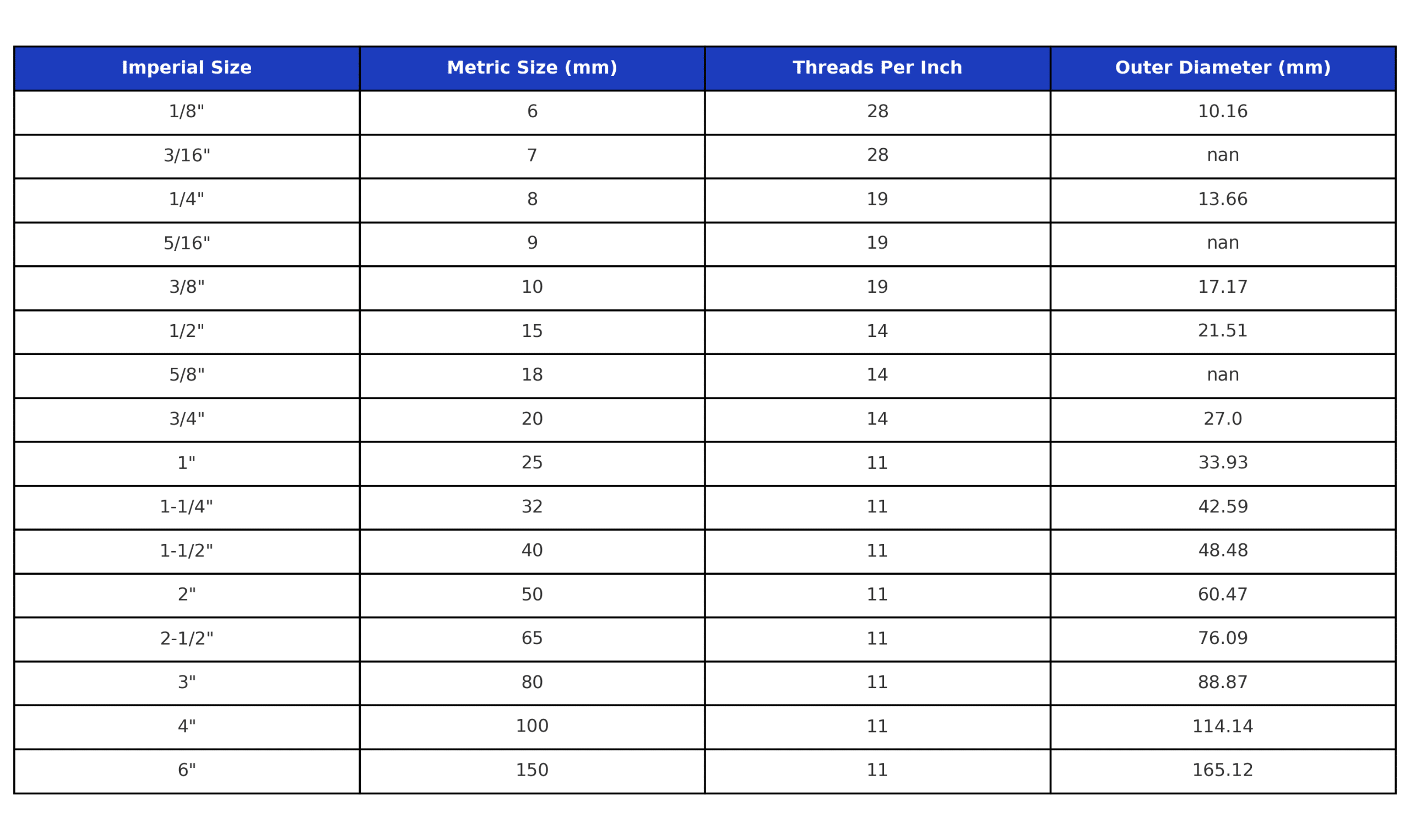
These FAQs also include images and charts covering thread types, valve configurations, and pressure fittings to support your installation. You can browse our full product range while you’re here.
Need official specs? Visit the Standards Australia website for more details on BSP pipe and valve classifications.
Scroll down to explore the full FAQ or click a section to jump to a specific topic. Our goal is to make this the most useful valve and fitting guide in Australia — for both domestic and trade users.
.
FAQ - AJ’S Valves Valves
Industrial Valves and Fittings FAQ
Welcome to AJ’S Valves’s expert guide to valves and fittings. Whether you're working on an industrial plumbing project, sourcing components for agriculture or irrigation, or just looking to understand domestic valve compatibility, this valve and fitting guide is here to help. Below, we answer the most common questions about BSP vs NPT threads, compression fittings, welded pipework, pressure systems, installation tips, and much more. This is your go-to resource for choosing the right valve — backed by over 30 years of AJ’S Valves’s industry experience. Need help selecting a product? Explore our range of ball valves, brass fittings, or thread sealants.Thread Types & Standards
Valve Basics & Types
What is a valve?
A valve is a mechanical device used to control the flow of liquids, gases, or slurries. It can start, stop, or regulate flow by opening, closing, or partially obstructing a passage within a system. Valves are essential in plumbing, irrigation, industrial processes, and many fluid handling systems.
What do valves do?
Valves can manage flow rate, isolate sections of a system, maintain pressure levels, control direction, and prevent backflow. The type of valve chosen depends on the specific application and function required.
 How do ball valves work?
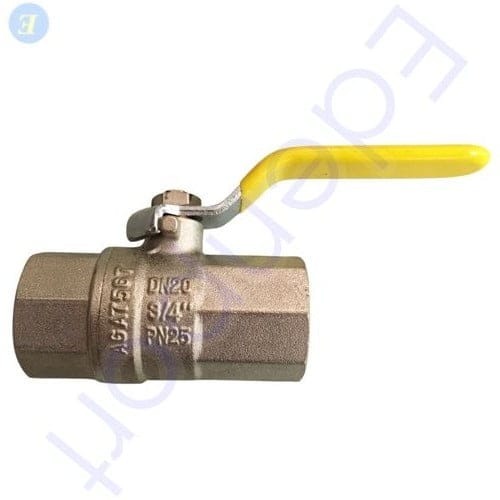
Ball valves use a rotating ball with a hole through it to control flow. When the hole aligns with the pipe, the valve allows full flow. Rotating the handle 90° blocks the flow. Ball valves are known for durability and reliable shut-off in high-pressure applications.
What is a pressure relief valve?
A pressure relief valve automatically opens when internal pressure exceeds a safe limit. It releases the excess pressure to protect the system. Once the pressure returns to normal, the valve reseals. These valves are vital for safety in pressurized systems.
How do ball valves work?
Ball valves use a rotating ball with a hole through it to control flow. When the hole aligns with the pipe, the valve allows full flow. Rotating the handle 90° blocks the flow. Ball valves are known for durability and reliable shut-off in high-pressure applications.
What is a pressure relief valve?
A pressure relief valve automatically opens when internal pressure exceeds a safe limit. It releases the excess pressure to protect the system. Once the pressure returns to normal, the valve reseals. These valves are vital for safety in pressurized systems.
How do ball valves work?
Ball valves use a rotating ball with a hole through it to control flow. When the hole aligns with the pipe, the valve allows full flow. Rotating the handle 90° blocks the flow. Ball valves are known for durability and reliable shut-off in high-pressure applications.
What is a pressure relief valve?
A pressure relief valve automatically opens when internal pressure exceeds a safe limit. It releases the excess pressure to protect the system. Once the pressure returns to normal, the valve reseals. These valves are vital for safety in pressurized systems.
Common Types of Valves:
- Ball Valve
- Gate Valve
- Globe Valve
- Butterfly Valve
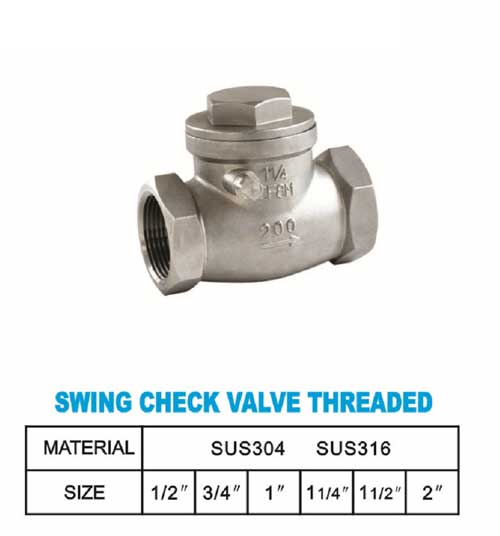
- Check Valve (Non-Return Valve)
- Diaphragm Valve
- Needle Valve
- Solenoid Valve
- Pressure Relief Valve
- Float Valve
- Three-Way Valve / Four-Way Valve
Fitting Materials & Grades
Which materials are used for valves and fittings?
Choosing the right material is essential for safety and performance. In this section of our valves and fittings guide, we cover stainless steel, brass, copper, PVC, and more — with advice on what suits domestic or industrial environments.
- Stainless Steel: Excellent corrosion resistance. Shop stainless steel fittings for high-pressure systems.
- Brass: Cost-effective and corrosion-resistant. Perfect for domestic and commercial plumbing.
- Carbon Steel: Strong and durable for industrial systems.
- Bronze / Copper: Often used in marine and high-conductivity applications.
- PVC / CPVC: Lightweight, corrosion-proof, ideal for irrigation and water systems.
- Nylon & Plastic: Used for chemical resistance and low-pressure applications.

Thread Sealants & Lockers
What are thread sealants?
Thread sealants are compounds applied to threaded pipe connections to create a tight, leak-free seal. They’re essential in plumbing, gas, and fluid systems — especially where pressure and vibration are involved.
Types of thread sealants:
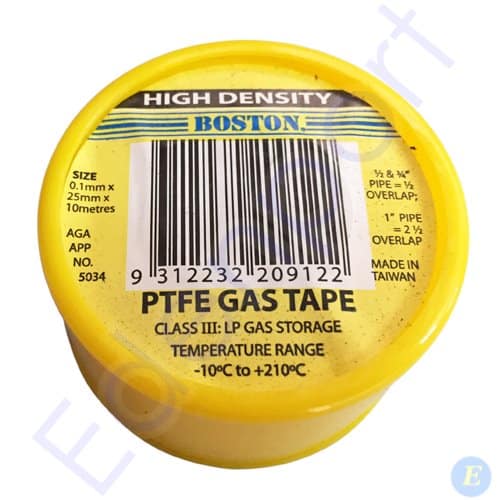
- PTFE Tape: A non-hardening tape used for sealing threads on water, gas, and air fittings.
- Pipe Dope: A paste that provides lubrication and sealing, ideal for metal-to-metal connections.
- Liquid Sealant: Anaerobic compounds that cure when air is excluded. Great for high-pressure applications.
- Low-strength: Allows easy disassembly with hand tools. Great for small fittings.
- Medium-strength: Holds tight under stress but can be removed when needed.
- High-strength: Creates a permanent bond. Used for critical systems and heavy machinery.

Pressure Gauges & Relief Valves
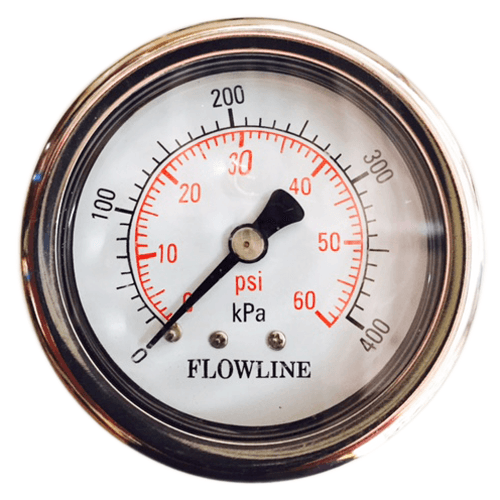
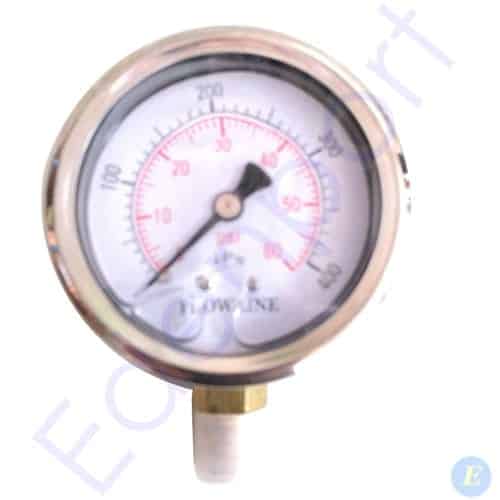
What is a pressure gauge?
A pressure gauge measures the pressure of a fluid (gas or liquid) in a closed system. It’s an essential part of any valves and fittings guide, ensuring systems operate within safe pressure limits.
Types of pressure gauges:
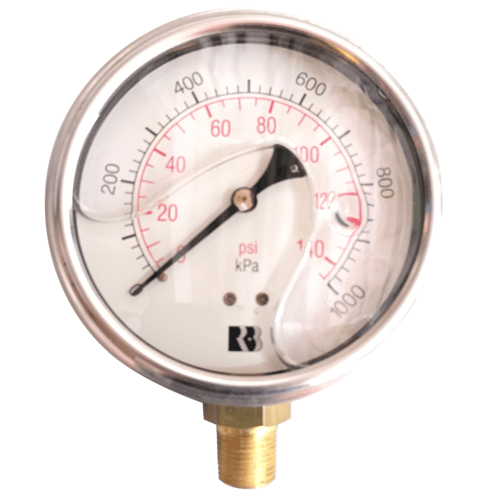
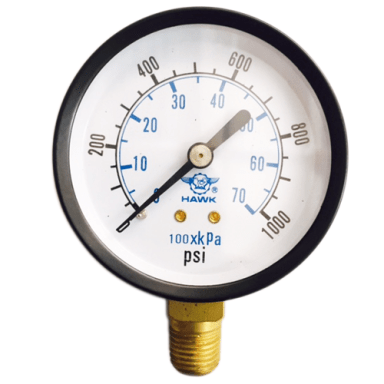
- Dry (air-filled): Cost-effective. Used in low-vibration environments.
- Liquid-filled: Contains glycerine or silicone. Ideal for vibration or pulsing systems — longer-lasting and more stable.
Dry vs Liquid-Filled Pressure Gauges

Compatibility & Safety Tips
Why is compatibility important?
Choosing compatible fittings, threads, and materials prevents leaks, corrosion, or system failure. This is one of the most overlooked parts of valve selection — and a key topic in any valves and fittings guide.
Tips for material compatibility:
- Use the same material across your system if possible (e.g. stainless to stainless).
- Don’t mix brass and stainless directly — use a dielectric union.
- Check chemical and temperature ratings for each fitting.
- Match pressure ratings across all connected parts.
- Inspect all fittings and threads before assembly.
- Use the right sealant for your material and application.
- Use proper torque — don't overtighten!
- Label valves and shut-offs for future maintenance.

Specialty Connections & Configurations
Why is compatibility important?
Choosing compatible fittings, threads, and materials prevents leaks, corrosion, or system failure. This is one of the most overlooked parts of valve selection — and a key topic in any valves and fittings guide.
Tips for material compatibility:
- Use the same material across your system if possible (e.g. stainless to stainless).
- Don’t mix brass and stainless directly — use a dielectric union.
- Check chemical and temperature ratings for each fitting.
- Match pressure ratings across all connected parts.
- Inspect all fittings and threads before assembly.
- Use the right sealant for your material and application.
- Use proper torque — don't overtighten!
- Label valves and shut-offs for future maintenance.

Installation & Maintenance
Why does proper installation matter?
Even the best fittings can leak or fail if installed incorrectly. Over-tightening, misaligned threads, or poor material choices are all avoidable problems covered in this valves and fittings guide.
Installation best practices:
- Clean threads before assembly to remove dirt or grease.
- Use PTFE tape or pipe sealant — never glue or silicone.
- Tighten to the correct torque — over-tightening can crack brass or plastic.
- Support pipework — don't let fittings carry weight alone.
- Use the correct type of thread (BSP, BSPT, NPT) for your fitting.
- Inspect for corrosion, thread wear, and leaks periodically.
- Operate isolation and ball valves occasionally to prevent sticking.
- Replace old washers and O-rings as needed.
- Drain unused lines before winter in frost-prone areas.
Compression Fittings & High-Pressure Use
Are compression fittings suitable for high-pressure use?
Yes — but only if they’re properly rated and correctly installed. In our valves and fittings guide, we recommend double-ferrule stainless fittings for high-pressure systems like hydraulics or chemical dosing lines.
Key performance factors for compression fittings:
- Material: Stainless steel is best for strength and corrosion resistance.
- Design: Double-ferrule fittings provide a better seal and hold than single-ferrule.
- Installation: Must be cut square, deburred, and tightened per spec — over-tightening reduces lifespan.
- Tube Condition: Tube must be clean, round, and correct wall thickness.

IBC Buttress Threads & Adaptors?
What is an IBC buttress thread?
IBC (Intermediate Bulk Container) valves often use non-standard buttress threads, such as S60x6. These do not match BSP or NPT fittings and require a specific adaptor — something we frequently cover in our valves and fittings guide.
Why can’t you connect directly to IBC threads?
Buttress threads have a wider pitch and profile. Trying to connect BSP or NPT fittings directly can lead to leaks, cross-threading, or valve damage.
Use an IBC adaptor:
- S60x6 adaptors – The most common IBC thread in Australia
- S100x8 adaptors – For larger or industrial chemical containers
- IBC to BSP – Converts outlet to a standard BSP fitting
- IBC to hose tail – For irrigation or chemical transfer lines
- IBC tap kits – Include ball valves, spouts, and quick-connect fittings
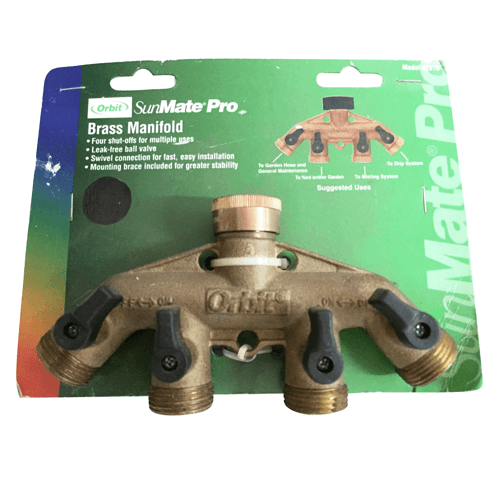
Three-Way & Four-Way Valves
What’s the difference between three-way and four-way valves?
These valves allow flow diversion or mixing from multiple lines — useful for irrigation, heating systems, or automated flow control. This part of our valve and fitting guide is especially helpful for engineers and system designers.
Three-way valve types:
- T-Port: Mix or divert fluid between two directions
- L-Port: Select flow between two outputs
- Available in ball valve and electric actuator formats
- Reduce system complexity
- Lower leak points vs using multiple valves
- Fast switching between flow paths
- Ideal for compact system layouts
Threaded vs Welded Fittings
What’s the difference between threaded and welded fittings?
Threaded fittings screw together using BSP or NPT threads, while welded fittings are permanently joined. This section of our valves and fittings guide outlines where each type is best used.
Threaded fittings:
- Easy to install with basic tools
- Reusable — great for systems needing occasional disassembly
- Suitable for low to medium pressure
- Ideal for plumbing, irrigation, and small-bore pipework
- Browse threaded brass fittings and stainless options
- Permanently bonded for zero-leak joints
- Used in high-pressure or critical flow systems
- Requires skilled labour and safety protocols
- Ideal for industrial, food-grade, and chemical setups

Using Multiple Valve Types in One System
Can I use more than one type of valve in the same system?
Absolutely — and in many cases, you should. Different valves perform different roles, and combining them ensures control, safety, and system efficiency. This final section of our valves and fittings guide helps you plan it right.
Common valve combinations:
Need more technical standards? Visit the Standards Australia website for more info on pipe fittings and thread types.
- Gate valves for isolation + check valves for backflow protection
- Ball valves for shut-off + globe valves for flow control
- Pressure relief valves with needle valves for pressure-sensitive circuits
- Three-way valves + solenoids for automated irrigation or dosing systems
- Check pressure and material compatibility across all fittings
- Label valves for operation and servicing
- Use correct flow direction — especially for check and control valves
- Plan shut-off points near filters, pumps, or meters for easy maintenance